
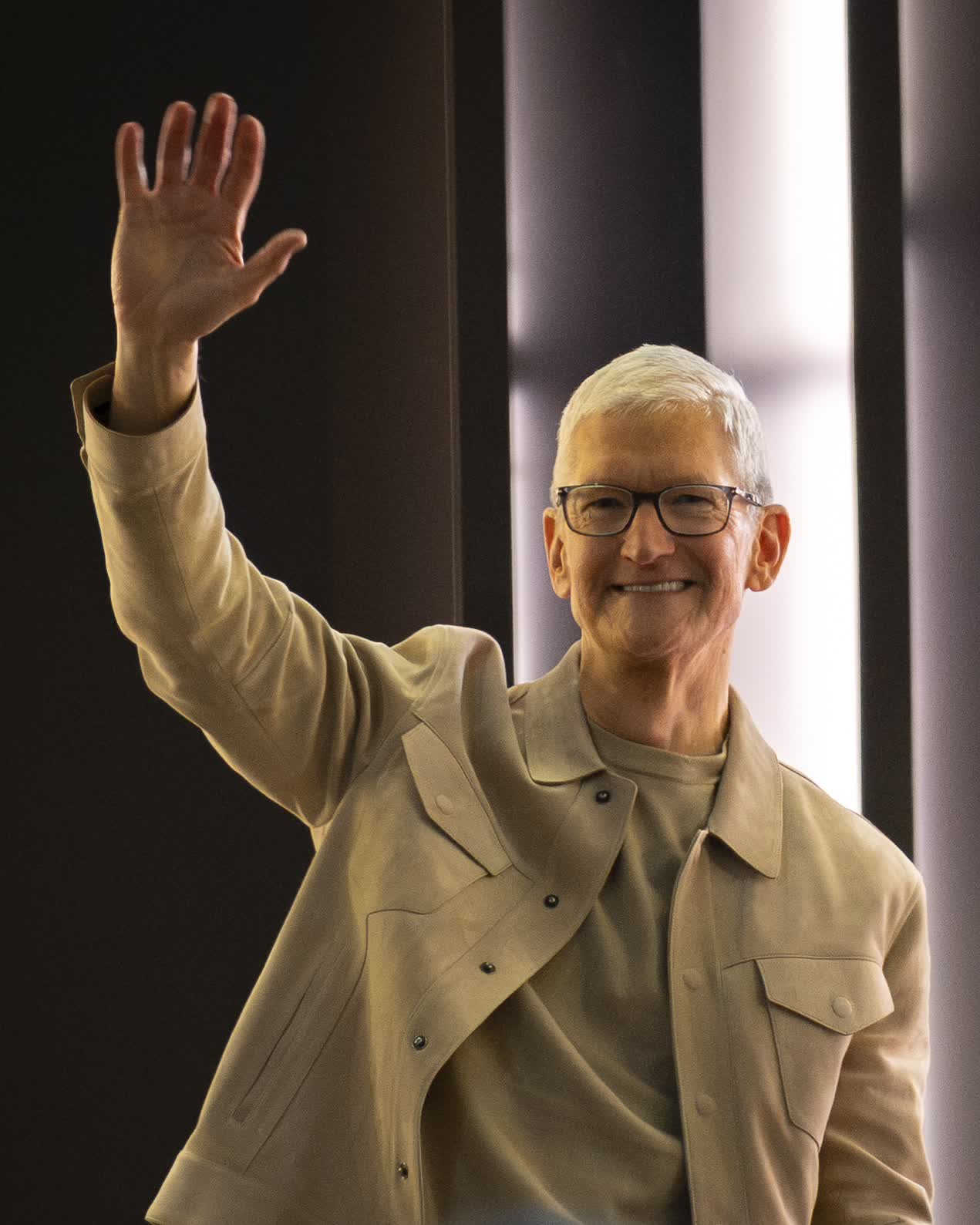
Apple has officially confirmed that the completely reimagined version of Siri will debut in 2026, and has disclosed the most consequential detail of the partnership: Siri will use Google’s Gemini as its frontier reasoning model, running on Apple’s Private Cloud Compute infrastructure.
The confirmation ends the biggest open question in Apple’s AI strategy: whether the company would build its own frontier model from scratch, partner with OpenAI at scale, or move to Google. The answer, announced in a joint Apple-Google communiqué, is Gemini — and the architecture is hybrid.
The Architecture
Three tiers of intelligence stack up under the new Siri:
- On-device — Apple Intelligence models for quick, private tasks (notification summaries, drafting, small-context reasoning)
- Private Cloud Compute — Apple-managed servers running a Gemini variant, for larger-context personal tasks with Apple’s privacy guarantees (no user data retained, full cryptographic attestation)
- Public Gemini fallback — for general-knowledge queries not tied to personal context
What’s Genuinely New
The Siri that ships in 2026 will be able to:
- See the screen — full on-screen awareness across first-party and third-party apps
- Chain actions across apps without user prompting (“move that email into a calendar invite with Tayo next Tuesday”)
- Use long context (Apple has suggested a 1M token working context via Gemini) for document-level reasoning
- Switch modalities natively — speech in, text out, image in, speech back
Privacy — The Headline Concession
Private Cloud Compute has been Apple’s privacy moat since 2024. The Gemini integration required Google to conform to Apple’s stateless-inference standard: no training on user queries, no logs persisted beyond the response cycle, verifiable via public-key attestation chains. Google has signed to these conditions for the duration of the partnership.
What Apple Gives Up
The partnership closes the in-house frontier path at Apple for now. Apple Intelligence models will continue to exist and improve, but the frontier reasoning is explicitly outsourced. In return, Apple gets:
- A 2–3 year capability advantage over a do-it-yourself timeline
- A cost structure Google absorbs as a strategic device-footprint play
- Optionality — Apple retains the right to swap providers at 18-month intervals
What Google Gets
Distribution to roughly 1.4 billion active iPhones. This is the largest single-partner deployment in Gemini’s history and materially accelerates Gemini’s path to parity with ChatGPT on daily-active-user metrics. It also underwrites the investment case for Gemini 4, expected at Google I/O on May 19.
Source: Apple / Google / The Verge








Leave a Reply