
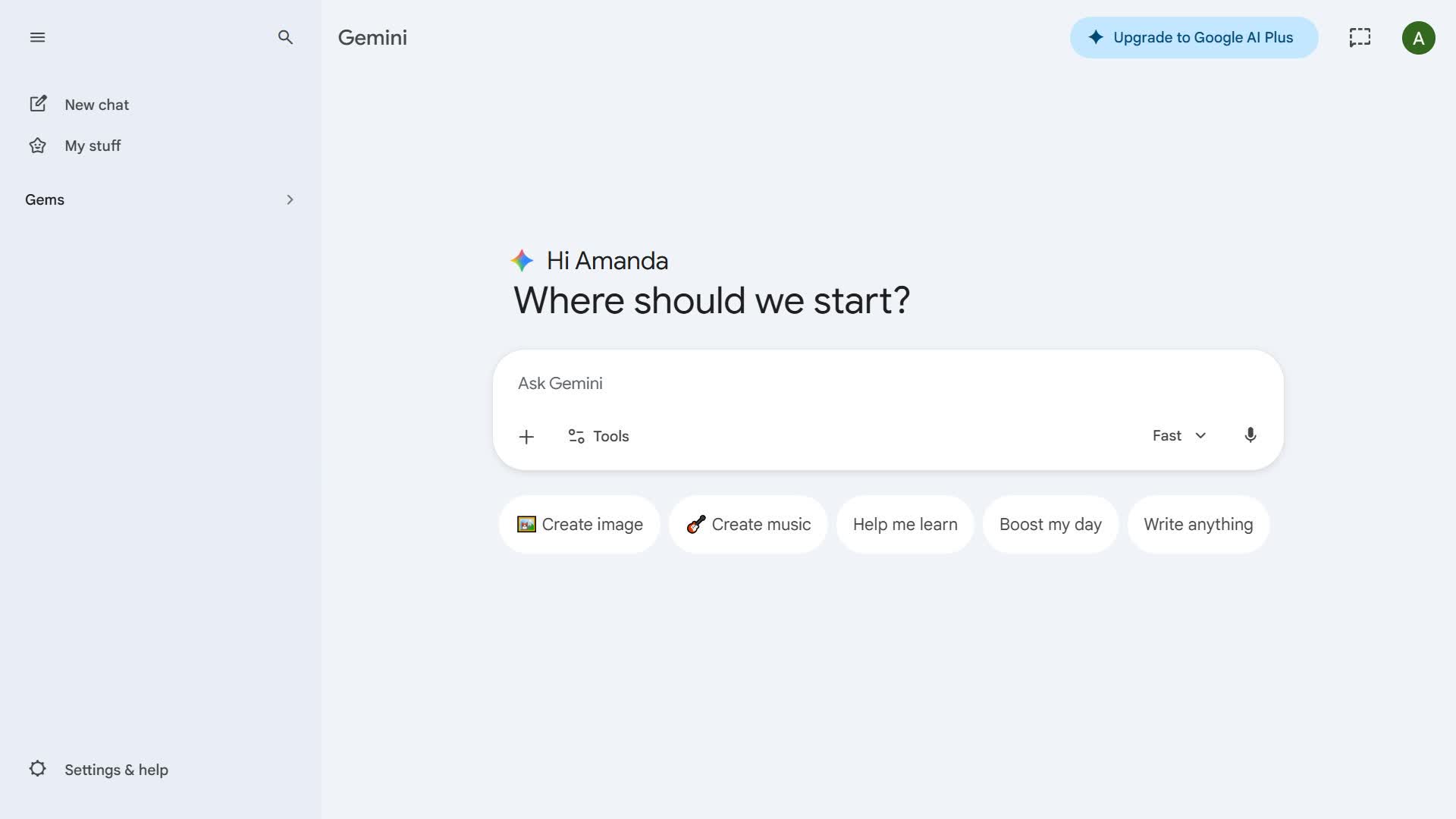
Google launched a standalone Gemini app for macOS on April 15, giving Mac users a dedicated AI assistant without a browser — a direct move against Apple Intelligence and Microsoft Copilot on the desktop. The same week, Google quietly launched Gemini 3.1 Flash-Lite, a new efficiency-focused model that delivers 2.5 times faster response times and 45 percent faster output generation at a significantly lower cost than its predecessors.
Gemini for Mac: what’s different
The macOS app gives Gemini a persistent presence on the desktop — available via the menu bar and keyboard shortcuts — without requiring users to navigate to gemini.google.com or open Chrome. It integrates directly with Google’s productivity suite, allowing access to Gmail, Google Drive, Google Calendar, and Google Docs from within the app. On Apple Silicon devices, the app is fast and native.
The significance is symbolic as much as functional. Since January 2026, Apple Intelligence on iOS and macOS has been powered in part by Google’s Gemini model under a deal announced in January 2026. A standalone app consolidates Google’s brand presence on Apple hardware, reducing the risk that users associate the AI capability with Apple rather than Gemini.
Gemini 3.1 Flash-Lite: cheaper and faster
Gemini 3.1 Flash-Lite is priced at $0.25 per million input tokens — making it among the cheapest competitive models available via API. It is 2.5 times faster at generating responses and produces output 45 percent faster than earlier Flash variants. The model is optimised for tasks that require speed and cost efficiency: real-time customer service, document summarisation, code review, and high-volume API calls.
The launch sharpens competition with Anthropic’s Claude Haiku models and OpenAI’s GPT-4o mini — both of which have positioned themselves as the cost-effective workhorses of enterprise AI deployment. Google’s pitch: comparable quality at a lower price point with better latency.
The bigger picture
Google’s AI positioning has been criticised for being reactive — Gemini 1.0 launched in response to ChatGPT; the Apple deal came after Apple publicly explored OpenAI. The Mac app and Flash-Lite launch suggest a more aggressive posture: getting Gemini in front of users wherever they work, and making the API cheap enough that startups and enterprises default to it at volume.













Leave a Reply