
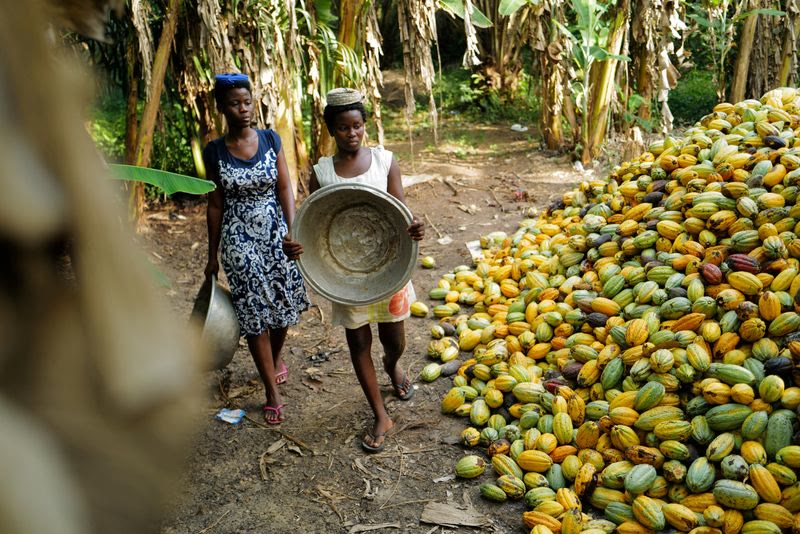
Cocoa farmers across Ghana’s Ahafo Region are sounding the alarm. Producer prices have been cut and payments delayed to the point where growers say cocoa farming is no longer financially viable. The warnings come at a moment when Ghana’s foreign exchange reserves are rebounding and the cedi is celebrated internationally — but the farmers who grow the country’s second-largest export earner say the economics at ground level tell a different story.
What farmers are saying
In interviews with Ghanamma and Rainbow Radio, farmers in the Ahafo Region described receiving reduced producer prices per bag of dry cocoa, with payments often arriving weeks or months after delivery. Input costs — particularly fertiliser and hired labour — have continued rising, while the effective cedi-denominated return on cocoa has not kept pace. “We are doing the work but the money does not match the sweat,” one farmer told Ghanamma.
The government’s response
The government has announced a free fertiliser scheme for cocoa farmers and scholarships for their children under the broader agriculture support budget. COCOBOD officials have said the price structure is set by the international market and that the Produce Buying Companies (PBCs) are under instruction to clear payment backlogs. But farmers say the in-kind assistance — while welcome — does not solve the immediate cash flow problem that determines whether they plant the next season.
What is at stake
Cocoa is Ghana’s second-largest export earner after gold, generating approximately $1.8–2.0 billion in foreign exchange in a normal year. When farmers say the economics do not work, that is not a local grievance — it is a warning for the entire economy. A decline in planting this season translates into lower output one to two years from now, reduced COCOBOD revenues, and a contraction in the foreign exchange inflows that have helped Ghana rebuild its reserves.
The structural tension
Ghana’s cocoa sector sits at an uncomfortable intersection: the government needs the foreign exchange cocoa generates, while COCOBOD needs to maintain producer prices high enough to keep farmers motivated to plant. The arrival of the EU Deforestation Regulation (EUDR) — which requires supply-chain traceability for cocoa entering Europe — adds a compliance cost that small farmers are not equipped to absorb. If that cost falls on the farmer, the economics deteriorate further.









Leave a Reply