
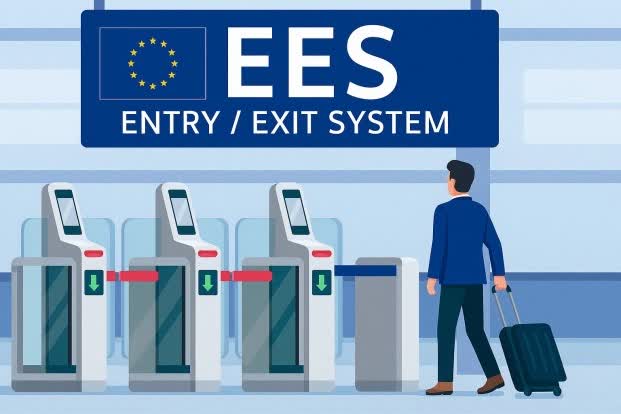
Starting April 10, 2026, the Schengen Area’s new Entry/Exit System (EES) is fully operational, replacing the decades-old manual passport stamping process with automated biometric data collection at all external European borders. Ghanaian travelers are being urged to prepare ahead of their next trip to Europe.
What the EES Means for Ghanaian Travelers
Under the new system, every non-EU national — including all Ghanaian passport holders — will have their fingerprints, facial images, and travel document details electronically recorded on their first entry into the Schengen zone. Subsequent entries will match against that stored record, making the border process faster but more data-intensive than before. The system tracks the length of stays, helping enforce the 90-day-in-180-days rule.
What You Need to Do Before You Travel
Ghana’s Ministry of Foreign Affairs has issued the following guidance for nationals travelling to EU or Schengen countries: ensure your passport has at least six months’ validity, familiarise yourself with the 90/180-day stay limits, and factor in additional processing time at border control during the initial rollout period — especially at major airports like Amsterdam Schiphol, Paris CDG, and Frankfurt.
Why This Matters
The EES has been in development for years following concerns about irregular stays and outdated border tracking. With an estimated 400 million border crossings recorded annually across the Schengen Area, the system represents one of the most significant changes to European border management in a generation. For Ghanaian travelers — whether visiting for tourism, business, or family — registration will now be automatic and unavoidable.
Vibes Uncut Media will continue to track how the rollout affects Ghanaian travelers at key entry points.














Leave a Reply