
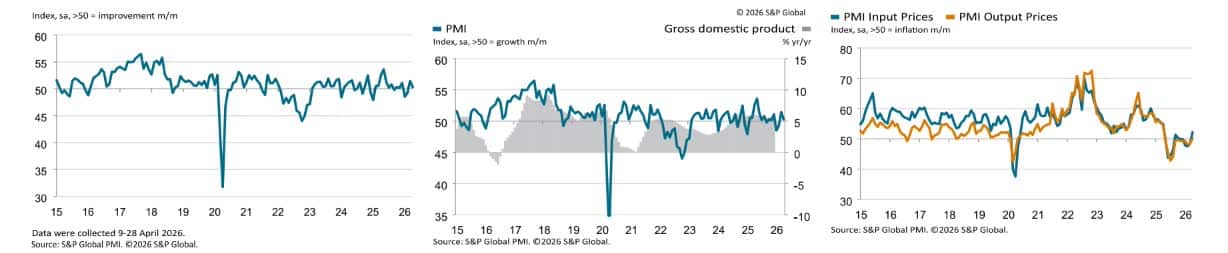
The S&P Global Ghana Purchasing Managers’ Index (PMI) posted 50.3 in April 2026, down from 51.4 in March, as private-sector output fell for the third time in four months. New orders continued to rise, but renewed input-cost pressure from higher fuel prices and imported items dragged business activity lower.
What The PMI Shows
- Headline PMI: 50.3 in April (vs 51.4 in March)
- Above 50 = expansion, below 50 = contraction
- Reading is the weakest expansion in several months
- Output decreased for the third time in the past four months, albeit only marginally
The Drivers
- New orders kept rising — demand is still there
- Input costs increased for the first time in six months, breaking a long disinflation streak
- Higher fuel prices and imported item costs were the headline factors
- Some respondents directly blamed rising prices for the activity slowdown
Why It Matters
- PMI is one of the cleanest near-real-time signals of Ghanaian private-sector health
- The split — orders up but output down — points to a supply/cost constraint, not a demand problem
- If sustained, it complicates the Bank of Ghana’s recent dovish posture
- Fuel-price feed-through threatens the 15-month inflation decline streak
What To Watch
- Whether the input-cost rise is a one-off or the start of a trend
- Cedi stability versus the dollar through May
- Energy regulator pricing decisions for the next bi-weekly window
- Manufacturing-sector specific PMIs for confirmation
Follow Vibes Uncut Media for continuing Ghana macro coverage.






Leave a Reply