
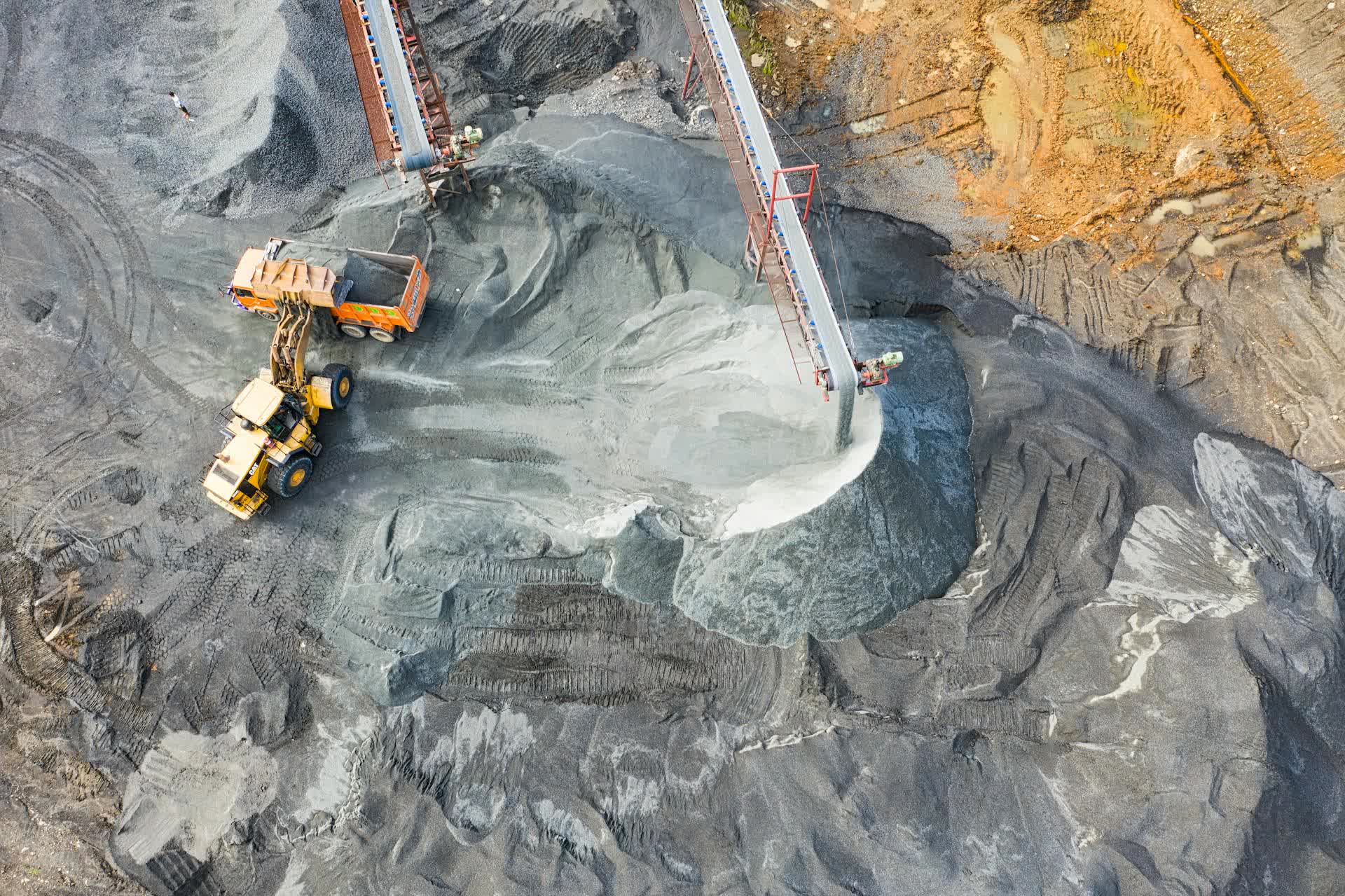
Every government in Ghana’s Fourth Republic has promised to end galamsey. Every single one has failed. Not because the task forces are incompetent, not because the laws are too weak, and not because the political will isn’t there — although all three are true. The deeper reason is simpler and more uncomfortable: galamsey works.
The Math Nobody Wants to Say Out Loud
A cocoa farmer in Ghana’s Western Region earns between $0.40 and $0.60 per day. That’s the reality for the backbone of what the country still calls its flagship agricultural export. The living wage in Ghana is roughly $13.50 per day. Cocoa doesn’t come close.
A galamsey miner, working the same soil in the same district, earns between $2.90 and $22.90 per day — and at the higher end of the operation, site managers and concession holders pull in $70 to $100 daily. That’s not a wage premium. That’s a different universe. When the choice is between $0.50 a day growing cocoa and $20 a day digging gold, the arithmetic isn’t ambiguous. It’s brutal.
This is the single fact that every anti-galamsey strategy ignores. You cannot arrest your way out of a 50:1 wage gap. You cannot burn excavators faster than the market can replace them. And you cannot tell a father feeding four children on subsistence farming that his choice to dig is a moral failure. It’s a rational one.
The Scale of the Industry Nobody Calls an Industry
Ghana’s small-scale gold mining sector — the legal and illegal parts combined — produced 1.9 million ounces of gold in 2024, up 70.1% from 1.1 million ounces in 2023. The small-scale sector now accounts for 39.4% of national gold output, up from 27.7% in 2023. The Ghana Gold Board recorded $8.06 billion in small-scale gold exports in the first ten months of 2025 alone.
The sector employs over one million Ghanaians directly, with an estimated three million more depending on it for their livelihoods — from the women who cook for mining crews to the mechanics who repair excavators. In some districts in the Western, Ashanti, and Eastern Regions, galamsey is not a side hustle. It is the economy.
Ghana generated approximately $11.6 billion from gold exports in 2024, accounting for 57% of total export revenue. Gold has overtaken cocoa, oil, and every other commodity. And a large and growing share of it comes from the very activity the state says it is trying to eliminate.
The Environmental Catastrophe Is Real — and Accelerating
None of this is an argument that galamsey is harmless. The environmental destruction is staggering and irreversible on any human timescale.
60% of Ghana’s water bodies are now polluted by mercury and heavy metals from mining operations. Rivers that once sustained fishing communities — the Pra, Ankobra, Offin, Birim, Tano — now run brown with sediment and toxic chemicals. The Ghana Water Company has recorded turbidity levels of 14,000 NTU in some rivers, seven times above the maximum treatable standard of 2,000 NTU. WaterAid warned in 2024 that at current rates, Ghana could be forced to import clean water by 2030.
Cocoa production has fallen to 429,323 tonnes — less than 55% of seasonal capacity. In the Mankurom community alone, galamsey has destroyed over 100,000 acres of cocoa farmland. Nationwide, over 30,000 hectares of cocoa farms were lost to mining in 2025. Thirty-four of Ghana’s 288 forest reserves have been invaded by illegal miners, with 4,726 hectares of protected forest devastated.
The human cost is worse. Doctors in mining communities report children arriving with mercury pellets visible on X-rays. Kidney failure in children now requires dialysis in districts that barely have clinics. Birth defects have surged in mining-heavy areas. Mercury crosses the placenta — mothers who drink contaminated water pass it directly to their unborn children, causing neurological damage, limb deformities, and developmental disorders that last a lifetime.
Why Every Crackdown Fails
Ghana has tried everything. Operation Vanguard. Operation Halt. Operation Halt II. Galamstop. Military deployments, excavator seizures, dawn raids, presidential task forces, and parliamentary committees. Between 2022 and 2024, 845 people were arrested for illegal mining. Only 35 were prosecuted — a conviction rate of 4%.
Five hundred seized excavators vanished without trace from government custody. A leaked report by former Environment Minister Kwabena Frimpong-Boateng accused “many party officials, their friends, personal assistants, agents, and relatives” of direct involvement in illegal mining. The NPP’s own Ashanti Regional Chairman operated a mining company — Akonta Mining — inside a protected forest reserve. He was told to stop. He was never prosecuted.
Between September 2017 and January 2025, the government issued approximately 2,000 mining licenses — compared to just 90 in the entire period from 1988 to 2017. The licensing explosion didn’t regulate the industry. It legitimised the gold rush while the rivers died.
The political calculus is naked. When the NPP cracked down on galamsey before the 2020 elections, party officials warned that enforcement cost them parliamentary seats in mining constituencies. The lesson was learned: no ruling party will sustain a crackdown that threatens its own vote base. Every operation starts with fanfare and ends with quiet withdrawal.
The Chinese Factor
Between 2008 and 2016, over 50,000 Chinese gold seekers migrated to rural Ghana, drawn by surging gold prices and facilitated by local collaborators. They brought with them an entire industrial supply chain from Shanglin County in Guangxi province: Sany and Caterpillar excavators, water pumps, mercury, and the changfan — a Chinese-designed sluice box that could process tonnes of river sediment per hour.
Ghana deported over 4,500 Chinese nationals during a 2013 crackdown. But the technology stayed. The changfan machines, the excavators, the processing methods — all were adopted by Ghanaian operators. The Chinese didn’t create galamsey. But they industrialised it beyond recognition, transforming what had been artisanal panning into mechanised destruction of entire river systems.
And the gold doesn’t stay in Ghana. An estimated 60 tonnes of gold were smuggled out of the country in 2022, mostly to the United Arab Emirates. Ghana loses an estimated $2 billion annually in unpaid taxes from illegal mining. The wealth is extracted. The poison remains.
What Would Actually Work
The answer is not more task forces. The answer is closing the wage gap that makes galamsey rational.
That means raising the farmgate price of cocoa so that farming can compete with mining for rural labour. It means building processing infrastructure so that Ghana captures more of the value chain in both gold and cocoa, rather than exporting raw commodities. It means creating formal, regulated small-scale mining with real environmental standards, real mercury-free processing, and real revenue sharing with affected communities — not 2,000 licenses with no supervision.
It means telling the truth: that galamsey is not a law enforcement problem. It is an economic structure. The rural economy produces poverty. Galamsey offers an exit. Until the legal economy offers a better one, no army deployment will change the outcome.
Every government has treated galamsey as a crime to be punished. None has treated it as a market failure to be fixed. That is why every crackdown fails. And that is why the rivers keep dying.



Leave a Reply