
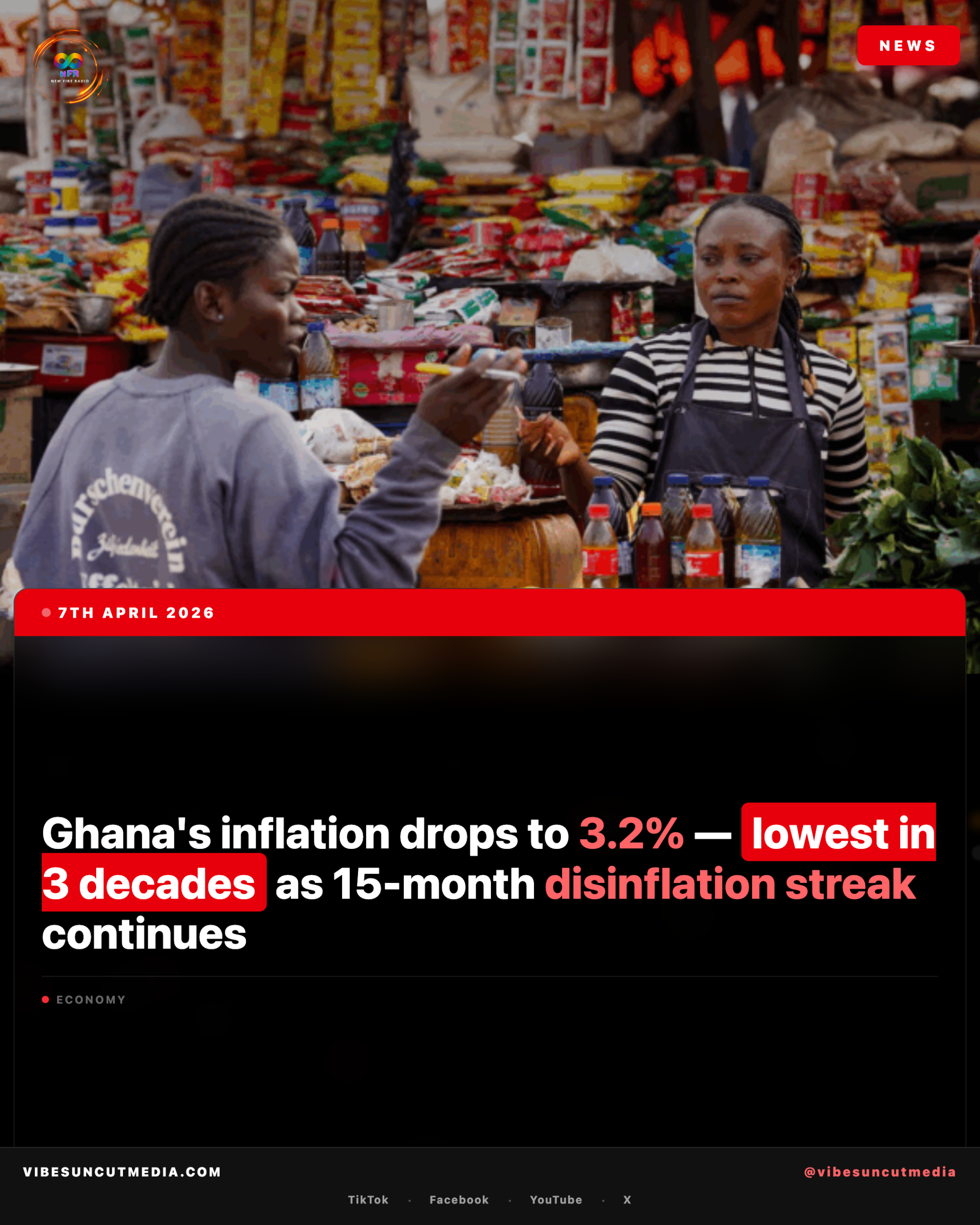
Ghana’s consumer price inflation has eased for the 15th consecutive month, recording a year-on-year rate of 3.2 percent in March 2026, according to the Ghana Statistical Service (GSS). The figure represents a slight decline from the 3.3 percent recorded in February and marks the lowest inflation rate since August 1999.
A Dramatic Turnaround
The achievement is even more striking when compared to 22.4 percent recorded in March of last year. The fifteen-month disinflation run reflects the combined effects of exchange rate stabilisation following Ghana’s debt restructuring, tighter fiscal and monetary policy, and the normalisation of global commodity prices that had previously fuelled price spikes.
Goods vs Services
While inflation for goods slowed sharply to 1.7 percent year-on-year — down from 3.2 percent in February — services inflation told a different story, surging to 7.2 percent from 3.7 percent the previous month. This divergence suggests that while imported and manufactured goods are stabilising, the cost of domestic services continues to climb.
Challenges Ahead
Despite the positive trajectory, analysts warn that Ghana’s price stability faces its biggest test yet. The ongoing Gulf oil crisis and disruptions to global shipping through the Strait of Hormuz could push energy and import costs higher in the coming months, threatening to reverse some of the hard-won gains.
For now, the data offers a bright spot for the Ghanaian economy and supports the case for the Bank of Ghana to continue its cautious approach to monetary easing.





Leave a Reply