
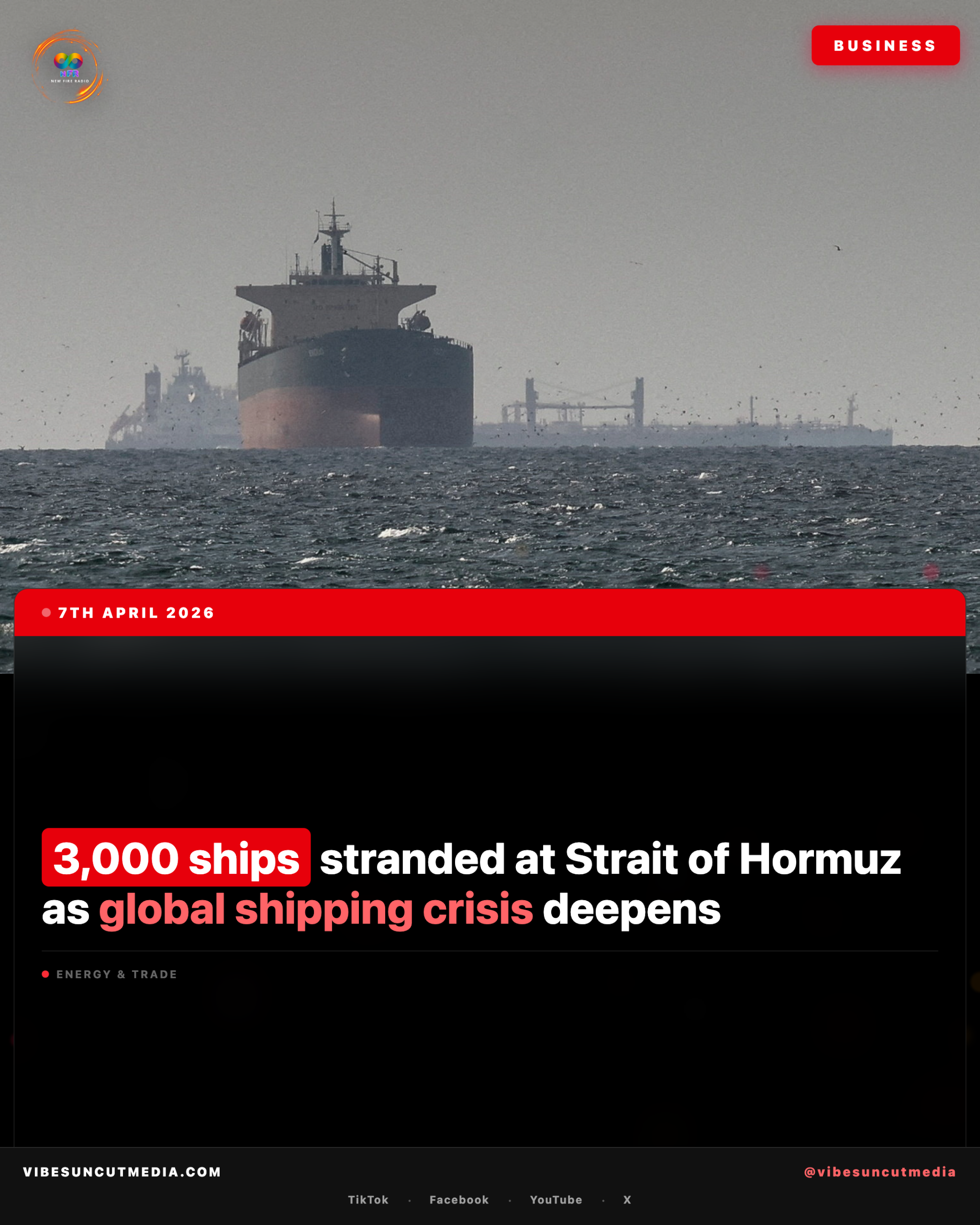
The Strait of Hormuz crisis has reached staggering proportions, with approximately 3,000 ships stranded around the critical waterway and some 20,000 seafarers trapped aboard vessels stuck west of the strait.
Traffic Collapse
Daily transits through the strait have plummeted from a pre-conflict average of 138 vessels per day to as few as five to 12 openly reported crossings in recent days — a 94% decline. Around 200 internationally trading tankers are effectively stuck in the Persian Gulf.
Attacks on Vessels
Since the start of the U.S.-Iran conflict, at least 24 commercial vessels have been hit, with three additional near misses. The attacks have made insurance costs prohibitive for most shipping companies.
Global Impact
Analysts are calling this the most severe energy supply shock since the 1970s. The disruption has triggered surging oil prices, fuel shortages in multiple countries, and urgent diplomatic manoeuvring. Much of the stranded cargo includes medical and humanitarian goods destined for Asia and Africa.
Two Indian-flagged LPG tankers recently managed to cross safely, but 16 other vessels remain stranded, underscoring the scale of the crisis.









Leave a Reply