
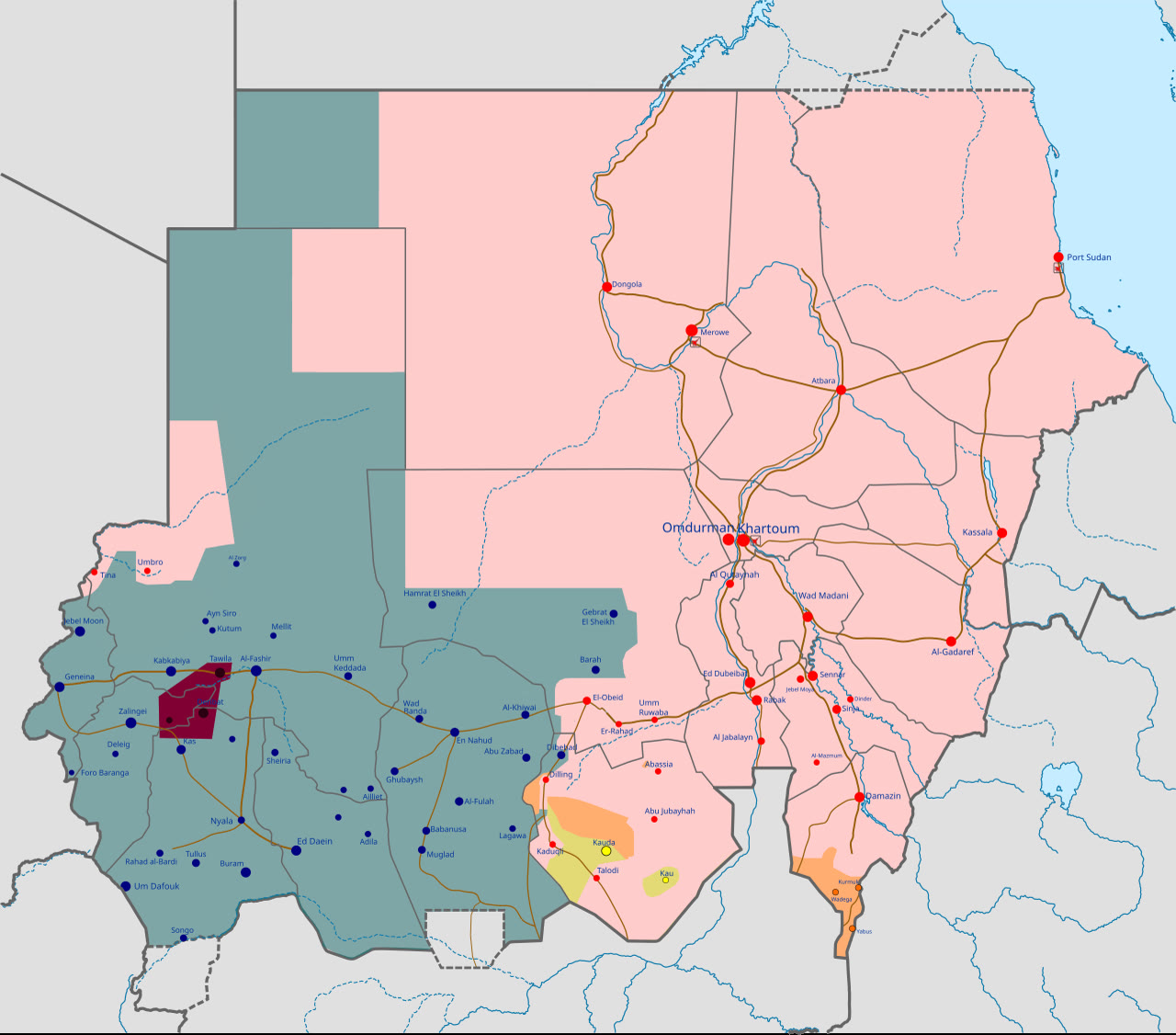
An African Union delegation led by Ambassador Mohamed Belaiche has formally returned to the Sudanese Foreign Ministry in Khartoum to assess the reopening of the AU’s diplomatic mission — the first significant multilateral re-entry since the city fell back to government control earlier this year.
The visit coincides with the third anniversary of the war between the Sudanese Armed Forces (SAF) and the paramilitary Rapid Support Forces (RSF) that has displaced more than 13 million people and produced what the UN now describes as the largest humanitarian crisis on Earth.
UN Agencies Returning
The World Food Programme, UNICEF, and the UN Office for the Coordination of Humanitarian Affairs have all confirmed phased re-opening of their Khartoum offices over the next 60 days. The IOM and UNHCR are following suit. International staff are expected to return for the first time since April 2023.
The AU mission’s reopening signals a tentative diplomatic normalisation — though the war continues in Darfur, Kordofan, and parts of Gezira state, where the RSF still controls significant territory.
The Numbers Behind the Crisis
- 13 million people displaced (8.6 million internally, 4.4 million as refugees)
- 26 million facing acute food insecurity (IPC Phase 3 or worse)
- 755,000 in famine conditions (IPC Phase 5) — concentrated in El Fasher and the Nuba Mountains
- 150,000+ direct conflict deaths (Armed Conflict Location & Event Data Project estimate)
Berlin Conference Echo
This week’s diplomatic activity follows the Berlin conference of April 15, where European, African, and Gulf donors pledged a fresh US$2.1 billion in humanitarian assistance — though donors warned that without a comprehensive ceasefire and protection of relief corridors, money alone will not stop the famine.
What’s Still Unresolved
The RSF has not signed onto any framework that involves disarmament. The SAF has rejected any political settlement that includes RSF leadership. Civilian political forces remain marginalised. The Quad mediation track (US-Saudi-Egypt-UAE) has stalled. The AU’s quiet return is a small but real shift — the first reversal of a three-year diplomatic vacuum.
Source: African Union / UN OCHA / Human Rights Watch

Leave a Reply