
Ghana still calls itself a cocoa economy. In 2024, it wasn’t. In 2023, it wasn’t. In 2020, it wasn’t. Somewhere in the last decade, the national balance of payments quietly rewrote itself — and the country’s self-image never caught up.
We are still teaching children that cocoa is our gold. We are still stamping pods on coins. We are still structuring budgets around Cocobod syndicated loans. But the dollars keeping the cedi alive are not arriving in crop-season shipments from Tema port. They are landing in mobile wallets in Kumasi, sent by nurses in Manchester, drivers in the Bronx, and cleaners in Rome.
The Numbers
In 2024, Ghana received $6.65 billion in officially recorded remittances — the Bank of Ghana’s own data. If you include informal flows — money sent by hand, through friends, outside the banking system — the IOM and UNCDF estimate the real figure is closer to $11.5 billion. Either way, it dwarfs everything else.
In that same year, cocoa export revenue was $1.73 billion. Remittances beat cocoa 4 to 1.
2025 made the gap worse. Remittances hit a record $7.8 billion — the highest in Ghana’s history. Cocoa, even at unprecedented global prices, brought in about $3.8 billion. Still half of remittances. And gold — the one export still larger — brought in around $20 billion, powered in significant part by small-scale mining that is tearing the country apart.
Step back and look at the full decade. From 2014 to 2024, remittances generated $28.6 billion for Ghana. Cocoa generated $18.7 billion. Gold generated $7.6 billion in that narrower series. Dr. Richmond Atuahene, a respected banking economist, called remittances Ghana’s “super gold.”
Remittances are now roughly 27–32% of all Ghana’s foreign-currency receipts. Bigger than oil. Bigger than cocoa. Bigger than everything except raw gold exports. This is not a small shift. It is the reclassification of the entire Ghanaian export base — and it happened without a single commemorative stamp.
Who Is Sending
Between 3 and 4 million Ghanaians live outside the country — roughly one in every nine citizens. The largest concentrations are in the United States (~174,000), the United Kingdom (~141,000), Italy, Germany, and Canada. These five countries alone account for roughly 90% of Ghana’s OECD-resident emigrants.
They are not wealthy investors. They are nurses, carers, delivery drivers, students, salon workers, engineers, finance professionals, pastors. The average sub-Saharan African diaspora remittance is ~$200 per transaction, 8–12 times a year per sender. That is school fees. That is hospital bills. That is rent covered for a grandmother in East Legon. That is an uncle’s funeral in Takoradi. That is a cousin’s university tuition.
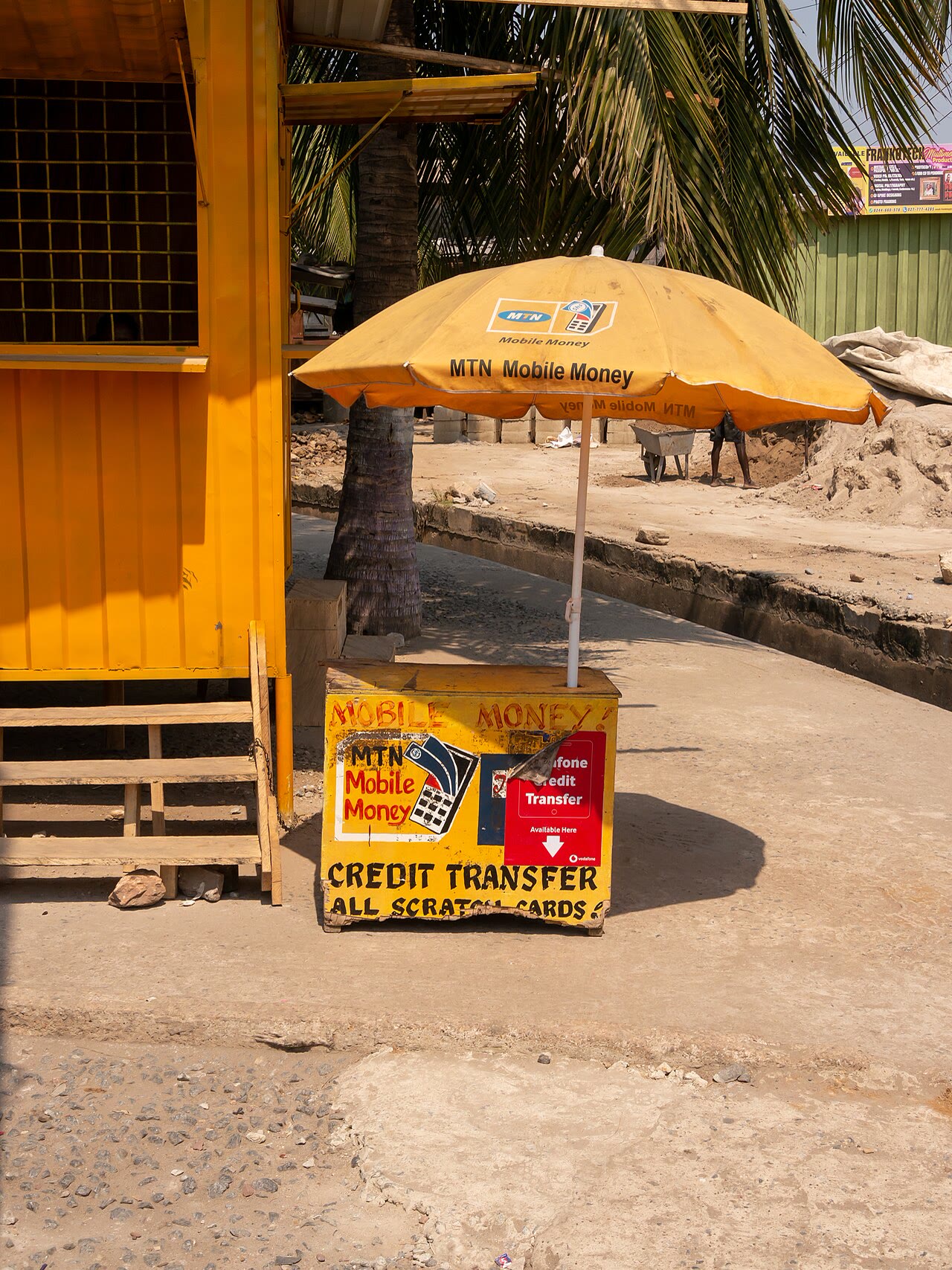
The platforms moving this money have changed everything. MTN MoMo now dominates roughly 89% of Ghana’s mobile financial services market. Zeepay is number two, specialising in direct remittance termination from 200+ countries into Ghanaian mobile wallets — transactions through Zeepay alone grew from $1.9 billion in 2021 to $2.9 billion in 2022. LemFi, Wise, Sendwave, Remitly, WorldRemit — all targeting Ghanaian corridors. The entire mobile-money market in Ghana was valued at $227 billion in 2025 and is projected to hit $770 billion by 2032.
A Ghanaian in Hamburg can now send 300 euros at 11 p.m. on a Tuesday and his mother in Kumasi receives it on her phone before breakfast. That is not a bank transfer. That is infrastructure.
The Cocoa Collapse
Meanwhile, the sector we refuse to stop calling our backbone is in freefall. Cocoa production crashed to 432,000 tonnes in 2023/24 — the worst harvest in 15 years. Volumes exported collapsed from 770,000 tonnes in 2020 to just 261,000 in 2024. Cocoa Swollen Shoot Virus has infected 81% of Ghana’s cocoa-producing area — 330,000 hectares out of 410,000. Galamsey has destroyed more than 30,000 hectares of cocoa farms outright, with mercury and cyanide leaching into soil and rivers.
And then there is smuggling. Between 2021 and 2024, Ghana lost at least $1.1 billion in cocoa to cross-border smuggling into Côte d’Ivoire and Togo, where farmers are paid more. In 2023/24 alone, 253,000 tonnes of beans walked out of the country. That is not a policy failure — that is farmers voting with their feet.
Cocobod, once a model parastatal, is in financial crisis. $2 billion in accumulated debt. Syndicated loans dropped from $681 million in 2023 to $50 million in 2024. For the first time since 1992, Ghana abandoned the syndicated loan model entirely. Cocobod lost $1.3 billion on forward contract rollovers it could no longer meet.
And in February 2026, the government slashed the farmgate price by 28.6% — from GH¢58,000 per tonne to GH¢41,392. That is a pay cut for 800,000 households — roughly 3.2 million people. The foundation is not just cracked. It is sliding.
The Narrative Lag
Here is the uncomfortable part. Everyone in the Ministry of Finance knows these numbers. The Bank of Ghana publishes them. The IMF briefs on them. But Ghana’s national story still treats cocoa as the anchor.
Look at the 20-pesewa coin. Cocoa pods. Look at primary school textbooks. “Ghana is cocoa, cocoa is Ghana.” Look at Independence Day parades — cocoa floats, cocoa songs, cocoa imagery. When the President addresses the nation on the economy, cocoa gets an emotional paragraph. Remittances get a footnote — if they appear at all.
There is a reason. Cocoa is a national project that sits on public land, runs through public boards, and employs public-sector imagination. Remittances are private. Millions of individual transactions between families. They do not fit neatly into a state narrative. They do not give ministers a ribbon to cut.
But the economy they built is the one paying the bills. The cedi does not stabilise on cocoa earnings anymore. It stabilises on diaspora flows. In months when remittances dip, the cedi slides. In months when they surge, the central bank breathes. And yet Ghana’s forex strategy is still headlined by gold purchases, syndicated commodity loans, and IMF tranches. Diaspora inflows are treated as weather — something that happens to you, not something you build around.
What Changes If We Tell The Truth
If Ghana officially declared remittances its number one foreign-exchange earner, the policy picture changes overnight.
You would issue diaspora bonds — the way Ethiopia, India, and Nigeria have — and raise billions at below-market rates from citizens who want to invest in their home country. Ghana has talked about this for a decade and delivered nothing at scale.
You would give the Ministry of Diaspora Affairs a real budget and real policy authority, instead of leaving it as a symbolic office. You would formalise the informal 40% leakage — the ~$5 billion a year still moving outside regulated channels — and capture the tax base and forex visibility that comes with it. You would accelerate dual citizenship, overseas voting rights, and structural recognition of a diaspora that already funds the country.
And you would stop pretending that cocoa reform alone will save the cedi. It will not. Cocoa is now a heritage sector and a climate-adaptation problem. It deserves dignity and support. But it is no longer Ghana’s top export. It has not been for a long time.
The most important national economic fact of the last ten years is this: Ghana’s biggest export is not a crop. It is not a mineral. It is not a manufactured good. It is Ghanaian people — trained at Ghanaian expense, working abroad, and wiring the difference home. That is not a failure. That is a revelation. What we do with it depends on whether we can update the story we tell ourselves.









Leave a Reply